Sign up to view this video
Join Now
Rigpa & Meditation on Impermanence
Tibetan Meditation on Impermanence
Geshe explained the Tibetan Buddhist practice of meditating on impermanence, which involves contemplating the cycle of life from birth to death and beyond, to cultivate a realistic understanding of life's transient nature. He emphasized that this practice is not meant to instill fear but to help practitioners accept reality and reduce attachment to material possessions and samsaric existence. Geshe also described how advanced practitioners can maintain a natural state of mind without needing to accumulate merit or engage in merit-making activities, contrasting this with ordinary karma-based approaches.
Understanding Meditation and Impermanence
The discussion focused on meditation and impermanence, with Geshe explaining that advanced yogis can rest in the natural state of mind while others should focus on karma and earning merit. Participant clarified that impermanence meditation helps one manage difficult life situations by recognizing change and death, allowing one to enjoy the present moment without attachment to past or future. Participant inquired about Sangela, which Geshe explained refers to the Medicine Buddha who helps purify negativities and transform them into positivity through enlightened practices.
Understanding Rigpa and Consciousness States
The group discussed concepts of impermanence and Rigpa, with participant explaining that Rigpa represents continuous awareness observing the mind's changing states, and Geshe confirming that while awareness is always present, our awareness of it varies. Participant raised questions about the Kalachakra Tantra's four states of consciousness and its connection to neuroscience, which Geshe explained relates to tantric practices focusing on transformation and observing consciousness during different states including sleep, dreaming, and sexual practice.
Laguk: Lunar Energy in Medicine
Geshe explained the concept of Laguk, or the energy of life, which moves through the body according to the lunar calendar and is crucial for medical practices and operations. He clarified that this energy is different from consciousness and power practices, as it is a moving force that changes position in the body. Participant expressed interest in learning more about this concept, and Geshe offered to discuss it further in the future. The conversation then shifted to participant's question about inner refuge, but the transcript ends before this topic is addressed.
Inner Refuge and Enlightenment Practices
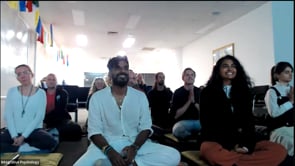
The discussion focused on the concept of inner refuge, with Geshe explaining that it involves understanding and cultivating one's own consciousness and awareness rather than relying solely on external practices like pilgrimage. The conversation explored how enlightened beings maintain consciousness despite appearing formless, with Geshe clarifying that while ordinary mind sees emptiness, enlightened beings are aware of reality. The conversation ended with a guided meditation led by participant, which included practices around impermanence, concentration, and bodhicitta, followed by a group chanting session.